
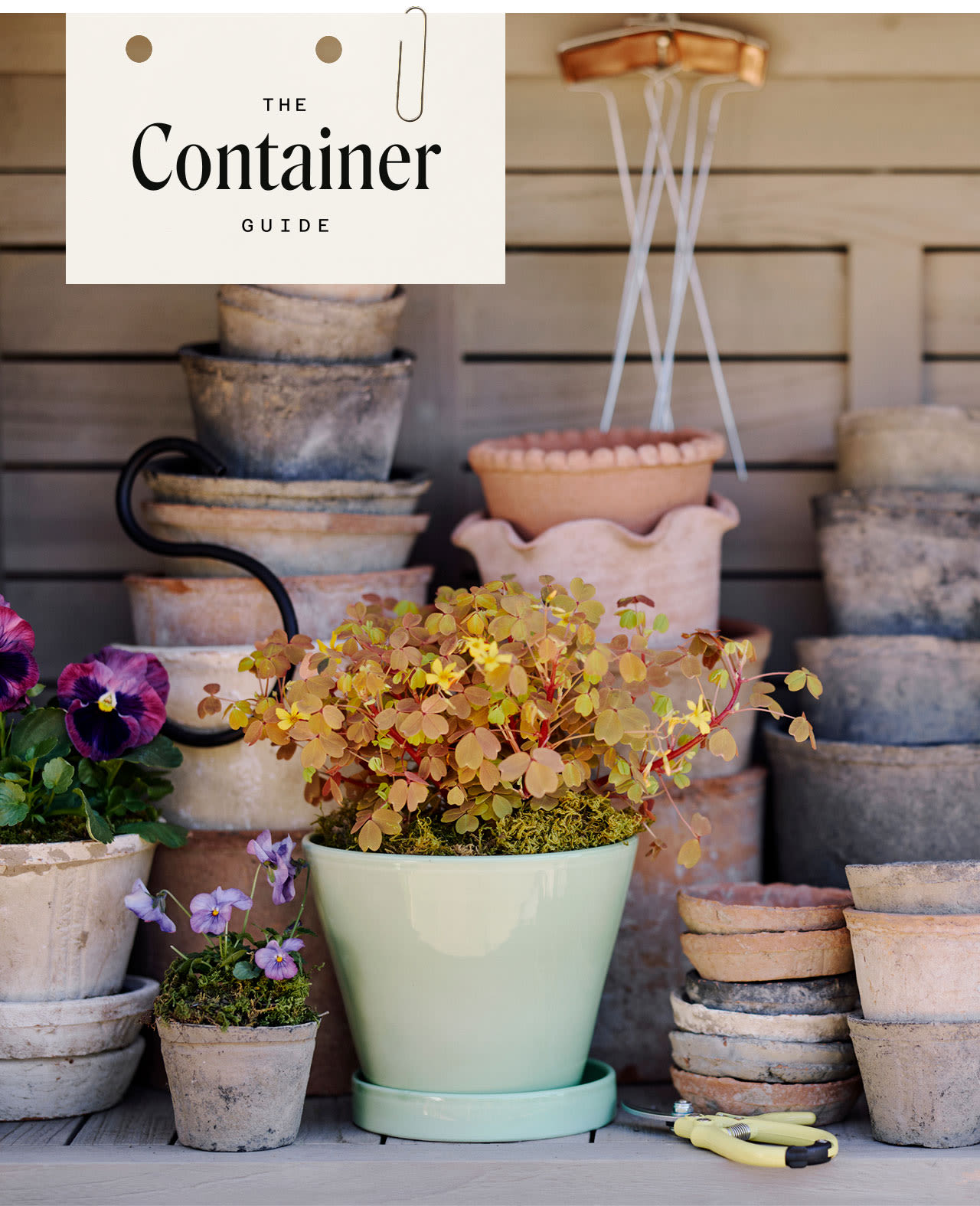
Planters offer opportunities to experiment, to embrace the splendor of each season, and plant with creativity. This comprehensive, informative guide is the backbone to that inspiration, helping you choose the perfect material, size, and shape for your projects.
Planter Material Features + Benefits
When choosing an outdoor planter, material is paramount. Below, you’ll find the most common outdoor container materials along with specifications and ratings for winter weather.
Fiber Concrete
A mix of fiberglass + concrete, shaped in molds; the combo of fiberglass + concrete offers exceptional durability while reducing weight
Earthenware
Clay fired below the temperature of vitrification (the point at which it becomes impervious to water) then glazed and fired again to seal its porous texture.
Terra Cotta
Kiln fired at 1800 degrees Fahrenheit
Breathable + develops a beautiful patina with age.
Stoneware
High fired at 1800-2400 degrees Fahrenheit.
Temps vitrify the clay, making it exceptionally strong and impervious to water. Most are glazed.
Cast Iron
Shaped in a mold from liquid iron. Substantial weight provides stability while durable materiality means years of use in the garden.
Galvanized Steel
Steel dipped into molten zinc, which chemically bonds to the iron in the steel.
Fiber Concrete
A mix of fiberglass + concrete, shaped in molds; the combo of fiberglass + concrete offers exceptional durability while reducing weight
Earthenware
Clay fired below the temperature of vitrification (the point at which it becomes impervious to water) then glazed and fired again to seal its porous texture.
Terra Cotta
Kiln fired at 1800 degrees Fahrenheit
Breathable + develops a beautiful patina with age.
Stoneware
High fired at 1800-2400 degrees Fahrenheit.
Temps vitrify the clay, making it exceptionally strong and impervious to water. Most are glazed.
Cast Iron
Shaped in a mold from liquid iron. Substantial weight provides stability while durable materiality means years of use in the garden.
Galvanized Steel
Steel dipped into molten zinc, which chemically bonds to the iron in the steel.
Indoor Planters
With no weather restrictions, indoor pots can be design-forward, with so many unique shapes, materials, and sizes to experiment with.
Planter Size Guide
Ensuring your planter’s size matches your plant’s growth requirements means healthy plants and healthy pots.
Planter Silhouettes
With container shapes, function follows form; each has its own advantages depending on the plants you’re using and where you’re placing it. Keep these practical considerations in mind first–then seek visual harmony between plant and vessel.
Urn
Elegant and elevated, a perfect option for high visibility placement. Stick to shallow-rooted, hardy specimens.
Jar
The curved silhouette creates a welcoming, informal appearance. A popular choice with many variations to choose from.
Taper
A popular style with myriad sizes and materials, all defined by sloping sides.
Straight Side
A great choice for cultivating large specimens, including trees. Stately shapes are ideal for designs in multiples, like symmetrical framing of a garden gate or doorway.
Bowl
Best matched with shallow rooted plants like succulents. Ideal to display on a pedestal, at the edge of a staircase, or tabletop.
Trough
Meant to be admired on an elevated surface like a mantel or tabletop, troughs are excellent vessels for showcasing your favorite plants in repeating, lush arrangements.
Urn
Elegant and elevated, a perfect option for high visibility placement. Stick to shallow-rooted, hardy specimens.
Jar
The curved silhouette creates a welcoming, informal appearance. A popular choice with many variations to choose from.
Taper
A popular style with myriad sizes and materials, all defined by sloping sides.
Straight Side
A great choice for cultivating large specimens, including trees. Stately shapes are ideal for designs in multiples, like symmetrical framing of a garden gate or doorway.
Bowl
Best matched with shallow rooted plants like succulents. Ideal to display on a pedestal, at the edge of a staircase, or tabletop.
Trough
Meant to be admired on an elevated surface like a mantel or tabletop, troughs are excellent vessels for showcasing your favorite plants in repeating, lush arrangements.
Structures
Where form meets function–structures provide support for trailers, delicate plants, and new growth. They also add aesthetic appeal that can enhance the overall appearance of the planter design. Structures also offer prime vertical real estate for small spaces.
Outdoor Planter FAQs
Tips to elevate your patio, porch, and backyard with lush, blooming botanicals this seasonYes, adequate drainage is essential for happy, healthy roots. When styling your patio with fresh botanicals, ensure your outdoor planters have drainage holes at the bottom. This allows excess water to escape after a heavy summer rain. Without proper drainage, soil becomes waterlogged, which can quickly lead to root rot. If you fall in love with a decorative pot that lacks a hole, simply keep your botanical in its original plastic nursery pot and place it inside the decorative vessel.
Filling large outdoor planters with solid soil can make them incredibly heavy. To keep things light and easy to move, start by adding a layer of lightweight filler to the bottom third of the pot. Empty plastic bottles, packing peanuts, or upside-down nursery pots work beautifully. Cover this base layer with a piece of landscaping fabric. Finally, fill the rest of the planter with a high-quality, nutrient-rich potting soil to give your blooming florals the perfect home.
If you live in a breezy coastal area or have top-heavy plants, you may need to weigh down your outdoor planters. To keep your beautiful arrangements anchored in the wind, add weight to the very bottom before adding soil. A layer of heavy gravel, river rocks, or even a few spare bricks will do the trick. This creates a sturdy, weather-ready base that keeps your vibrant greenery standing tall, no matter the weather.
The best material for outdoor planters depends on your climate and aesthetic. Terracotta and ceramic offer a classic, earthy warmth but can crack in freezing winter temperatures. For year-round durability, lightweight fiberglass, resin, and concrete composites are wonderful choices. They withstand the elements beautifully while mimicking the elegant look of natural stone or wood. Choose a material that complements your outdoor furniture for a seamless, welcoming glow.
Choosing the right size outdoor planter ensures your botanicals have room to flourish. As a general rule, select a pot that is one to two inches wider in diameter than the plant's current vessel. For fast-growing outdoor plants, you can size up by three to four inches. Visually, the planter should comfortably balance the height of the plant. A well-proportioned planter not only supports healthy root growth but also creates an elegant, curated look on your porch or patio.